
What Is Wix?
Wix is an all-in-one website builder designed to help individuals and small teams create visually polished websites without managing hosting, servers, or technical setup.
Instead of assembling infrastructure separately, Wix bundles design tools, hosting, security, and maintenance into a single platform. Users work inside a visual editor, choose from pre-built components, and publish directly within the Wix ecosystem.
This approach makes Wix especially appealing for projects where speed, simplicity, and visual control matter more than deep customization or long-term scalability.
How Wix Works in Practice
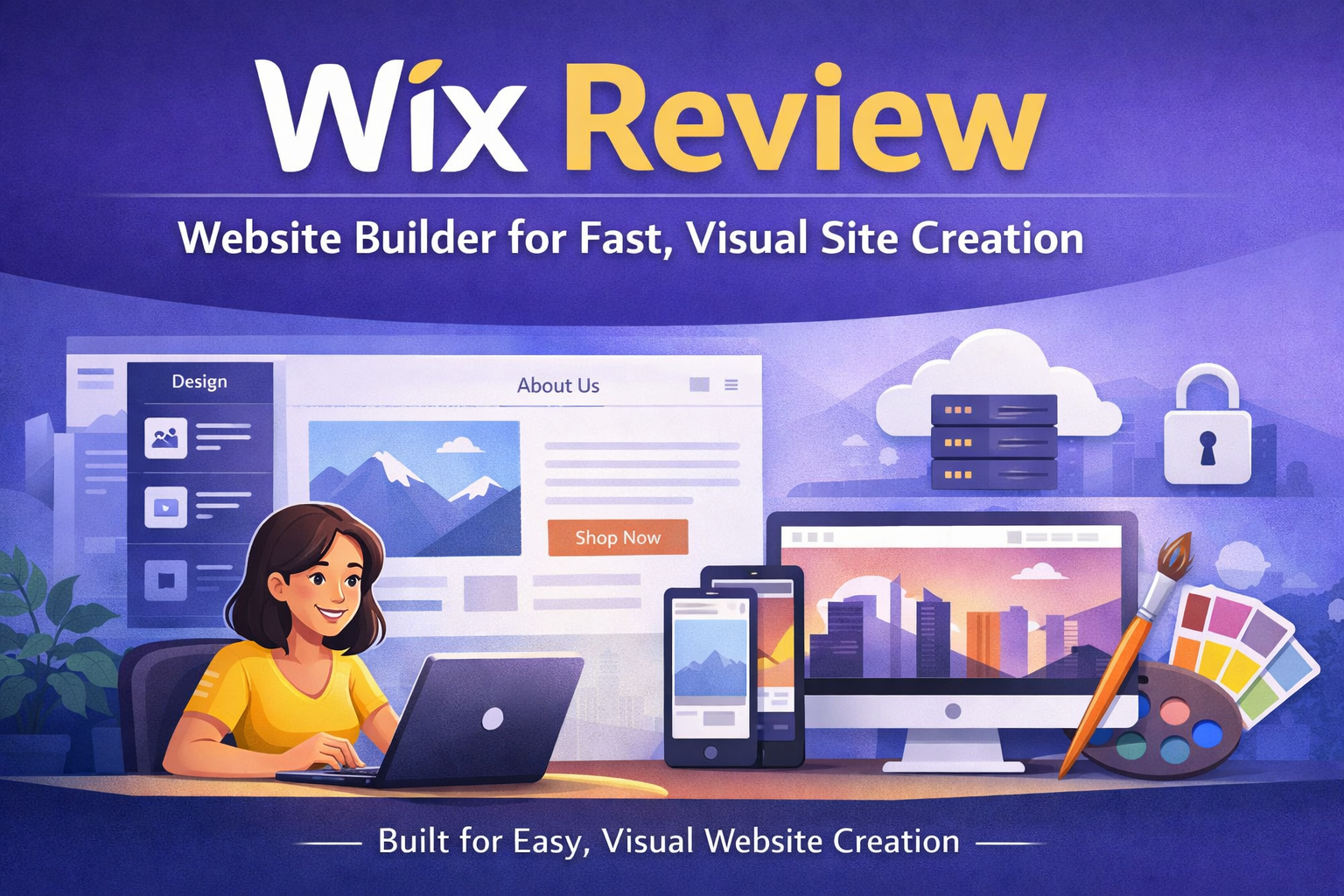
Wix centers around a drag-and-drop editor that allows users to design pages visually. Layouts, sections, and elements are adjusted directly on the canvas, reducing the need to understand themes, templates, or code.
Behind the scenes, Wix manages hosting, updates, and security automatically. Users do not need to think about servers, caching, or deployment. This hands-off model removes many technical decisions, but it also means that key parts of the system remain abstracted.
In practice, Wix works best when the website’s structure and requirements are relatively stable and unlikely to change significantly over time.
Who Wix Is Best For
Wix is a strong fit for users who prioritize design and speed over extensibility.
It works particularly well for:
- Personal websites and portfolios
- Small business landing sites
- Creators who want visual control without technical overhead
- Projects with a clear, fixed scope
For these use cases, Wix allows users to focus on content and presentation without worrying about infrastructure.
Where Wix Starts to Feel Limiting
As requirements grow, some of Wix’s trade-offs become more noticeable.
Common limitations include:
- Restricted access to underlying site structure
- Limited flexibility for advanced SEO workflows
- Constraints around custom integrations and automation
- Dependence on platform-specific features and plans
These constraints are not issues for every project. However, they can become friction points when a website evolves beyond its initial purpose.
Wix in the Context of Long-Term Website Growth
For long-term growth, websites often need to adapt — adding new content models, integrating tools, optimizing for search, or supporting automation.
Because Wix is a closed ecosystem, scaling in these directions typically means working within predefined boundaries rather than shaping the system freely. This can be sufficient for design-first projects, but less ideal for sites that become part of broader content or productivity workflows.
This distinction is why platforms like Wix are often evaluated differently from hosting-based setups discussed in our website infrastructure overview .
Wix vs Other Website Platforms (Contextual Perspective)
Wix is often compared with both website builders and hosting-based platforms. While the tools may appear similar on the surface, they are designed for different priorities.
Website builders emphasize immediacy and visual control. Hosting-based platforms emphasize flexibility, ownership, and long-term adaptability.
For readers evaluating this trade-off, our Hostinger review explores how hosting-based WordPress setups approach control, scalability, and system ownership.
When Wix Is the Right Choice — and When It’s Not
Wix is the right choice when:
- You want to publish quickly with minimal setup
- Visual editing is your top priority
- Your site’s scope is clear and unlikely to expand significantly
Wix may not be the best fit when:
- You expect complex SEO or content scaling
- You plan to integrate automation or AI workflows
- Long-term flexibility and ownership are critical
Understanding this distinction helps avoid switching platforms later under pressure.