
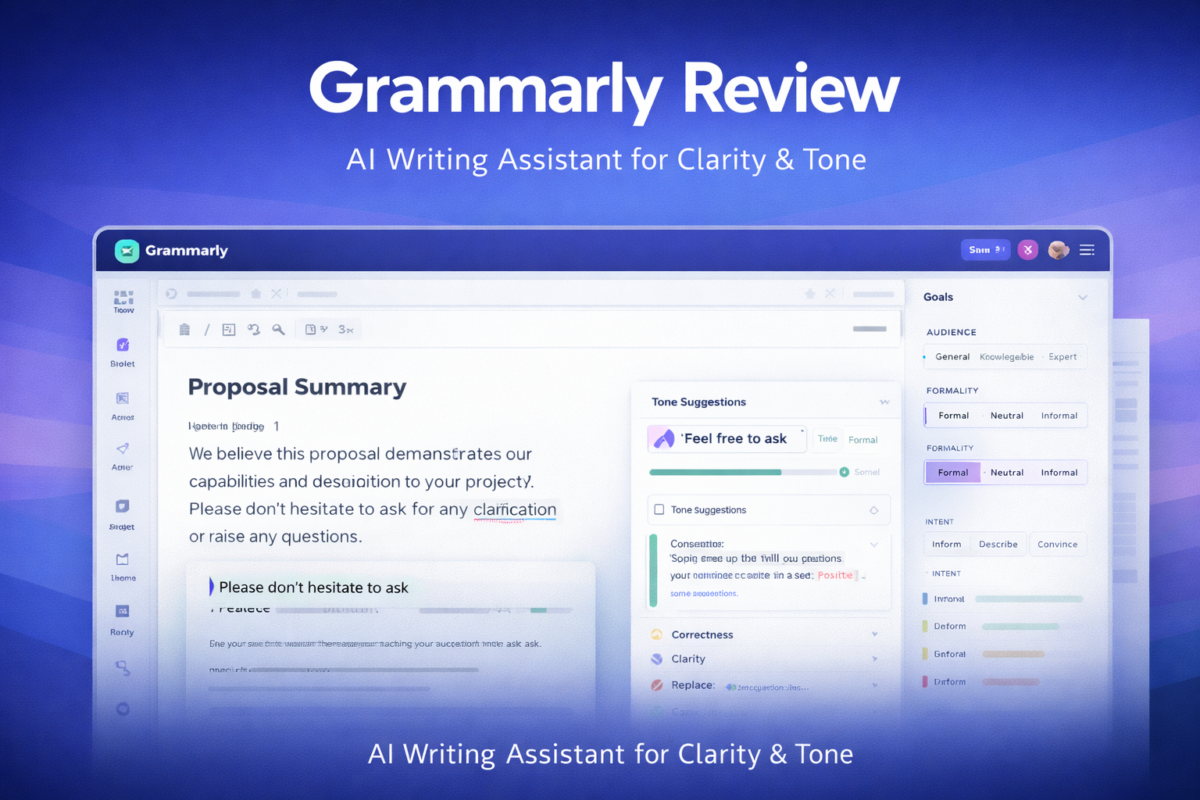
Grammarly is an AI-powered writing assistant focused on clarity, correctness, and tone, rather than content generation from scratch. It is designed to help users improve existing text—making writing more accurate, readable, and professional across everyday and business contexts.
This review evaluates Grammarly as an evergreen AI writing tool, examining how it performs in real-world writing and editing workflows, where it adds the most value, and where its limitations become clear.
What Grammarly Is
Grammarly is best understood as an AI editor, not a full content creation platform.
- It does not replace human thinking or long-form drafting tools
- It does enhance clarity, grammar, tone, and consistency in written text
Most users rely on Grammarly after the first draft, not before it.
How Grammarly Is Commonly Used
In practice, Grammarly fits naturally into everyday writing workflows, especially where accuracy and tone matter.
How Grammarly actually fits into real writing workflows
Grammarly works best when treated as a continuous quality layer rather than a writing assistant that replaces thinking. In practice, most professionals use it after drafting — to refine clarity, tone, grammar, and consistency — not to generate content from scratch.
Its real value shows up in everyday writing moments: emails, reports, documentation, and collaborative documents where small language issues compound quickly. Used this way, Grammarly reduces cognitive load and review time without interfering with the author’s voice or intent.
Common use cases include:
- Editing emails, documents, and internal communication
- Improving clarity and tone in business writing
- Polishing blog posts and articles before publication
- Checking grammar and style for non-native English writers
- Ensuring consistent tone across team-written content
Grammarly is often used alongside other AI writing tools, not instead of them.
Key Strengths in Real-World Use
Writing Accuracy and Clarity
Grammarly excels at identifying grammatical errors, awkward phrasing, and unclear sentences—often catching issues traditional spell-checkers miss.
Tone and Intent Awareness
Its tone suggestions help writers adjust messages for professionalism, confidence, or friendliness, which is especially useful in workplace communication.
Seamless Integration
Grammarly integrates directly into browsers, word processors, and writing apps, allowing users to edit text where they already work.
Strong Support for Non-Native Writers
For users writing in English as a second language, Grammarly provides meaningful guidance that improves readability without rewriting intent.
Where Grammarly Falls Short
Limited Content Generation
While Grammarly offers some AI rewrite suggestions, it is not designed for long-form content creation or idea generation.
Contextual Understanding Has Limits
In complex or highly specialized writing, Grammarly may suggest changes that are grammatically correct but contextually unnecessary.
Not a Strategy Tool
Grammarly improves how something is written, not what should be written or why.
Who Grammarly Is Best For
When Grammarly is the right choice — and when it is not
Grammarly is an excellent fit for professionals who already know what they want to say but need support polishing how it is said. It shines in environments where clarity, tone, and consistency matter more than ideation — such as business communication, academic writing, and collaborative documents.
However, Grammarly is not designed to replace creative thinking or long-form content planning. Users looking for deep reasoning, content structuring, or original idea generation will often need to pair it with a more generative AI tool rather than relying on Grammarly alone.
Grammarly is a strong fit for:
- Professionals writing emails, reports, and documents daily
- Content creators polishing drafts before publishing
- Teams that care about tone consistency and clarity
- Non-native English speakers seeking confident, natural writing
It is not ideal for users looking for AI-driven content ideation, research synthesis, or full article generation.
Grammarly vs AI Content Generators
Grammarly serves a different role than tools like ChatGPT, Claude, or Writesonic.
- Content generators focus on creating drafts
- Grammarly focuses on refining and improving existing text
In many workflows, Grammarly works best as the final quality-control layer.
How Grammarly Fits in the AI Writing Tools Category
Within AI writing tools, Grammarly occupies a supportive but critical position. It is not the starting point of the writing process—but often the last step before publishing or sending.
For users who value clarity, professionalism, and correctness, Grammarly remains one of the most reliable AI writing assistants available.
Editorial Verdict
Grammarly is a mature, dependable AI writing assistant that shines in editing, tone refinement, and writing accuracy. While it does not replace full content creation tools, it plays an essential role in producing clear, professional writing across personal and business use cases